
Next-Gen PartnerOps Video Podcasts

Navigating AI Disruption in Partner Ecosystems

The TSD Partner Ecosystem Strategy is facing a massive transformation today. Private equity consolidation and AI adoption are the primary drivers of this change. Technology value is now measured and delivered in entirely different ways than before.

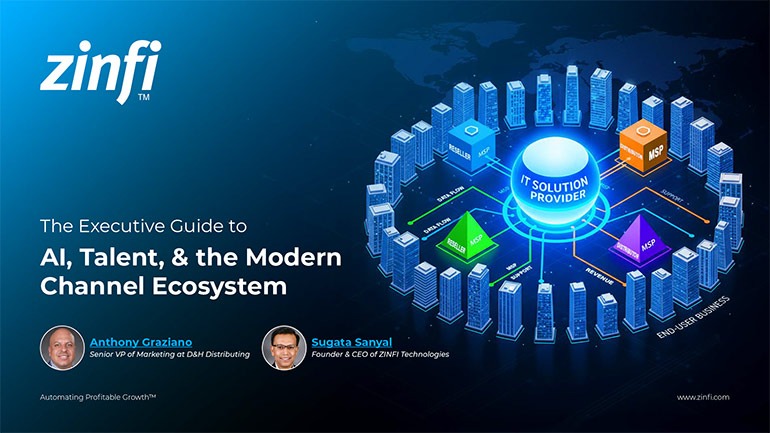
In this podcast episode, Sugata speaks with channel expert Kameron Olsen. They discuss how old relationship-based selling is being replaced by structured pipelines. Context-driven AI systems and productivity-focused value propositions are now the standard. The TSD ecosystem includes five major distributors and many technology advisors.

AI is collapsing traditional go-to-market structures and redefining the employee value equation. This shift creates massive new opportunities for organizations willing to move quickly. Expert Kameron Olsen explains how to navigate these significant industry changes effectively. Strategic growth now requires a deep understanding of these complex, evolving digital systems.

"AI only works in a world of context. If you go in with context and put it through an AI engine, the output’s just incredible. You’re probably 95-98% there. The question is really how you are capturing data — new data you’re creating — and how you are using that within the AI system."

Kameron Olsen, President, The Channel Advisors.

Video Podcast: Navigating AI Disruption in Partner Ecosystems

Chapter 1: The State of Partner Ecosystem Strategy in the TSD Channel

The TSD channel is building a robust Partner Ecosystem Strategy for the future. Private equity firms are consolidating independent master agents into five major global entities. This consolidation brings much-needed structure and shared tooling to a historically fragmented channel.

The current Partner Ecosystem Strategy must focus on operating effectively at a massive scale. Firms that survive will balance these aggregated structures with deep individual business relationships. Maintaining local trust remains vital for advancing high-value technology deals today. Suppliers are increasingly drawn to a variable-cost Partner Ecosystem Strategy for growth. This model allows brands to pay commissions only after deals are successfully installed. It eliminates the heavy fixed overhead associated with managing a large internal salesforce.

Adopting a diverse Partner Ecosystem Strategy is now a core financial business decision. It provides instant access to thousands of advisors without any upfront hiring costs. This efficiency makes the TSD model highly attractive for modern market penetration efforts.

AI is currently flooding modern Partner Ecosystem Strategies with innovative solutions. Advisors must now help clients navigate complex stacks beyond simple network connectivity products. Generative and agentic AI tools are competing for attention within the channel daily.

Winning advisors will use a Partner Ecosystem Strategy to solve complex business problems. They must position themselves as critical problem-solvers rather than mere cost-cutters. AI serves as the connective tissue for operational workflows and improved productivity outcomes.

Chapter 2: Partner Lifecycle Management — Building a Structured Channel Sales Methodology

A formal methodology is often missing from today's standard Partner Ecosystem Strategy. Unlike IT or manufacturing, the TSD channel grew through informal and personal introductions. This lack of structure makes it difficult for suppliers to measure their returns.

Improving the Partner Ecosystem Strategy requires a repeatable and highly disciplined lifecycle methodology. Suppliers often spend significant money on programs without understanding where they might fail. Closing this structural gap is essential for achieving long-term sustainable channel growth.

Kameron Olsen treats his Partner Ecosystem Strategy like a traditional and disciplined sales pipeline. You must identify target partners and reach out with a very compelling pitch. Discovery helps you accurately understand their business model and ideal customer profile.

A successful Partner Ecosystem Strategy includes building joint sales enablement plans for partners. You should manage the relationship through quarterly business reviews and detailed loss analysis. This discipline applies the rigor of CRM platforms to the partner relationship layer.

Chapter 3: AI-Powered Channel Sales — Context, Data, and the New Value Proposition

Most organizations are using AI incorrectly in their current Partner Ecosystem Strategy. They treat AI like a search engine, entering prompts with insufficient context. This approach leads to generic responses that do not help the business grow.

When systems receive rich organizational data, the output quality improves to near perfection. A modern Partner Ecosystem Strategy relies on feeding AI-specific and continuously updated information. This strategy ensures that every AI interaction provides 95 percent relevance to users.

New AI-powered PRM infrastructure provides direct implications for a digital Partner Ecosystem Strategy now. Platforms can capture desktop activity in real time to build a dynamic context layer. This enables AI to identify automation opportunities and accurately measure baseline productivity gains.

Technology advisors can now deliver a value proposition based on productivity via Partner Ecosystem Strategy. They move beyond simple cost-saving pitches to promise a doubling of team output. This shift changes the conversation from saving money to generating massive operational value.

The podcast format itself serves as a structured data source for Partner Ecosystem Strategy. Every conversation with a practitioner reveals specific customer pain points and market friction. Transcribing and tagging this content creates a unique intelligence asset for the organization.

Chapter 4: The Future of Partner Ecosystems — AI Disruption, Data Privacy, and Organizational Survival

As AI capabilities accelerate, structural questions regarding Partner Ecosystem Strategy are becoming existential. Leaders must confront concerns about data privacy and the threat of competitive displacement. Legal uncertainty around copyright and competitive intelligence remains a significant challenge for everyone.

The organizations that keep their core context private will lead in Partner Ecosystem Strategy. Leveraging AI for external go-to-market motions creates a structural advantage that compounds daily. Protecting proprietary data while using AI tools is the key to long-term success.

Large enterprises must move fast to deploy AI within their Partner Ecosystem Strategy now. Slow-moving organizations risk becoming the Sears or Kmart of their industry. AI-native entrants can build competitive solutions in weeks rather than taking many years.

Old moats that once protected large channel programs are no longer durable or safe. Organizations frozen by red tape will lose to competitors sprinting ahead. A winning Partner Ecosystem Strategy requires the ability to adapt to rapid technology shifts.

The TSD channel is a logistics organization that moves information and manages various commercial relationships. AI is the ideal technology for optimizing these complex logistics at a global scale. This outcome-based model represents the next major evolution of modern channel management systems.

Frequently Asked Questions

How is AI disrupting partner ecosystem strategy in the TSD channel?

AI is disrupting the TSD Partner Ecosystem Strategy by shifting the focus from simple cost-saving pitches to high-level productivity outcomes. It acts as the "connective tissue" that integrates a client's operational workflows with their technology investments. This allows advisors to solve complex business problems rather than just selling connectivity.

What is a Technology Solutions Distributor, and how does it differ from an MSP?

A TSD acts as a central hub in a Partner Ecosystem Strategy, sitting between hundreds of suppliers and thousands of independent technology advisors. Unlike a Managed Service Provider (MSP) that provides direct technical support and billing, a TSD focuses on the logistics of commercial relationships and commission-based sales models.

How should suppliers build a structured partner lifecycle management program?

Suppliers must treat their Partner Ecosystem Strategy like a disciplined sales pipeline. This involves a repeatable methodology: identifying target partners, conducting deep discovery of their business models, and creating joint enablement plans. Success is maintained through quarterly business reviews, win-loss analysis, and ROI tracking via integrated CRM platforms.

What is the best approach to capturing context data for AI-powered channel sales?

The most effective Partner Ecosystem Strategy involves capturing real-time desktop activity and industry conversations. By transcribing and tagging interactions with practitioners, organizations build a rich context layer. When AI is fed this specific, continuously updated organizational data, the relevance of its output jumps from 50% to nearly 98%.

How are AI-native organizations reshaping through-channel marketing automation?

AI-native entrants are redefining Partner Ecosystem Strategy by deploying "vibe-coded" solutions in weeks rather than years. They use automation to operationalize market intelligence at scale, identifying client friction points instantly. This speed allows them to bypass the red tape and rigid structures that often slow down traditional, legacy-based channel programs.